


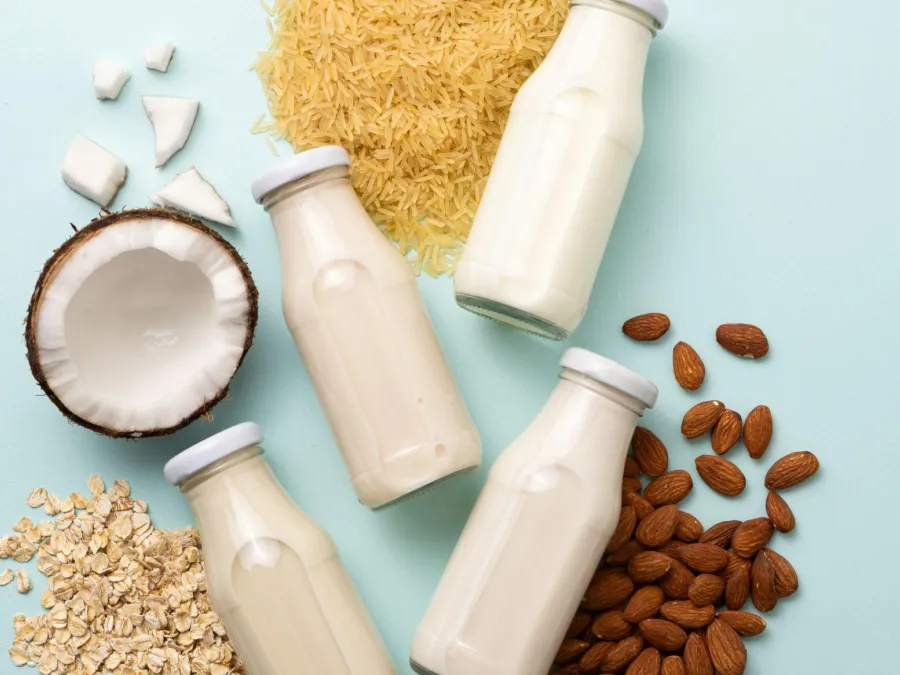
How do plant-based milks compare to cow’s milk?
When compared to cow’s milk, there are some key differences.
Research auditing Australian supermarket products found that, compared to cow’s milk, many plant-based milks naturally contain less energy (kilojoules) and saturated fat, and lower amounts of important nutrients like calcium, iodine and vitamin B12 unless they’ve been fortified, meaning that these nutrients have been added to them during processing.
In Australia, many plant-based milks are fortified with calcium. However, fewer are fortified with the other key nutrients including zinc, iodine, phosphorus and vitamins A, D, B2 and B12. This means you need to check the ingredients list and the nutrition information panel. Plant-based milks commonly contain food additives (like emulsifiers) to keep the milk smooth and stop the ingredients from separating. That is why the ones that do not contain emulsifiers can appear lumpy. See below for more information on emulsifiers and other additives.
If choosing a plant-based milk, here are some key things to look out for on the nutrition label.
What to look for on the label
1. Calcium
Calcium is essential for healthy bones and teeth, muscle function and heart health. Most adults need around 1000mg of calcium per day, and it is better absorbed when it comes from dairy foods (like cow’s milk, yoghurt, and cheese) compared to other calcium-rich foods like nuts and seeds, leafy green vegetables, tinned fish, or calcium supplements. This is because the calcium in dairy foods is highly bioavailable and the body can absorb and use it well.
If you avoid dairy, fortified plant milks can help you meet your needs. Around 80% of plant-based milks in Australia are fortified with calcium, and when they are, levels are similar to that in cow's milk. However, but it’s important to note that calcium in plant-based milks is not as bioavailable as it is in cow’s milk (that means your body cannot absorb it as easily). Depending on the type of plant-milk (soy, almond, oat), you'd need to drink 5 to 22 times the amount of milk to get the same amount of calcium from cow’s milk.
If you choose to drink a plant-based milk, ensure you are getting higher amounts of calcium from other sources (like nuts and seeds, leafy green vegetables, tinned fish with bones). Keeping a food record (using an App like Easy Diet Diary) can help you see how much calcium you’re getting from your daily food intake.
Check your calcium requirements here.
What to look for in a plant-based milk:
- At least 100mg of calcium per 100mL on the Nutrition Information Panel
- Ingredients like calcium, calcium carbonate or calcium phosphorus listed in the Ingredients List
2. Iodine
Iodine is needed to produce thyroid hormones. There hormones are essential for supporting brain and nervous system growth and development, keeping the brain functioning well, and controlling metabolism and energy production.
During pregnancy, a baby’s brain needs iodine to grow and develop well, so adequate intakes of iodine is especially important for women who are pregnant and /or breastfeeding. The good news is that it does pass into breastmilk. Iodine is also important for babies and toddlers due to rapid brain growth.
Most plant-based milks are not fortified with iodine so if you don’t consume cow’s milk, it’s important to boost your intake of other iodine rich foods such as seafood, seaweed, bread-making flour, other dairy products (yogurt and cheese) and eggs. If you do not consume any of these, you may need a supplement.
While it’s not common in Australia, some brands may have:
- Ingredients like kelp or seaweed added to them to increase the iodine content.
3. Vitamin B12
Vitamin B12 is an essential vitamin that your body needs to produce red blood cells, synthesise DNA, and maintain a healthy nervous system. Vitamin B12 is found almost exclusively found in animal-based products like red meat, chicken, seafood, and dairy products so it’s harder to get on a fully plant-based diet.
Not getting enough vitamin B12 can lead to serious physical, neurological and psychological consequences including megaloblastic anaemia, nerve damage and cognitive decline, so it is important to look for B12 fortified products (or consider supplementation*) if following a plant-based eating pattern.
Around 27% of plant-based milks are fortified with vitamin B12.
What to look for:
- Added B12 on the Nutrition Information Panel (0.4µg per 100 mL is common)
- Ingredients like vitamin B12, cobalamin, or cyanocobalamin listed in the Ingredients List
*A GP or dietitian can help you determine if you need a Vitamin B12 supplement to meet your requirements.
4. Protein
Soy and pea-based plant milks contain much higher levels of protein compared to the other plant-based milks. This is because legumes have more protein in them than nuts or grains and cereals (like almonds and oats). For some people this will be important to consider, particularly for toddlers and young children who rely on milk as a source of protein and nutrients. The most important role of protein is to help build and repair body tissues, supporting growth, recovery, hormone production, and many other important functions in the body.
Protein is made up of chains of molecules called amino acids. 9 of these amino acids are classified as ‘essential’ meaning that the body cannot produce them and they need to be obtained from food. Unlike other plant-based milks, soy milk (and other soy products) contains all nine essential amino acids.
Some brands now have a ‘high protein’ range of plant-based milks which have added soy protein.
What about additives?
You might notice ingredients like emulsifiers and stabilisers in plant-based milks. These help the liquid and fat stick together so that the milks stay smooth.
Some additives are considered safe, for example:
- Acacia or Gum Arabic (414)
- Arabinogalactan or larch gum (409)
Some additives are considered to be more harmful, for example:
- Polysorbate 80 (433)
- Sodium carboxymethyl cellulose also known as cellulose gum or Na CMC (466)
- Carrageenan is (407)
Read more on food additives here: Are Food Additives Bad for You? Understanding the Science Behind What’s in Your Food
Try the YUKA app (product scanner) to check the food additives in your foods.
The bottom line
If you’re choosing a plant-based milk over cow’s milk, check the nutrition label. Look for added nutrients like calcium and make sure you’re getting enough vitamins and minerals from other foods in your diet.
- For help with assessing your nutrient intake, find an Accredited Practising Dietitian here
- Take the Healthy Eating Quiz to see how healthy your diet is
- Should you drink plant 'milk'? with Dietitian Isobel Harmer
- To read the publication: Harmer, et al. How do plant-based milks compare to cow's milk nutritionally? An audit of the plant-based milk products available in Australia. Nutr Diet. 2025 Feb;82(1):76-85.
- Bone Health Assessment Tool: Know your Bones Quiz
- 5 Dairy Myths Debunked
Credit: Laureate Professor Clare Collins and Georgia Rea APD