
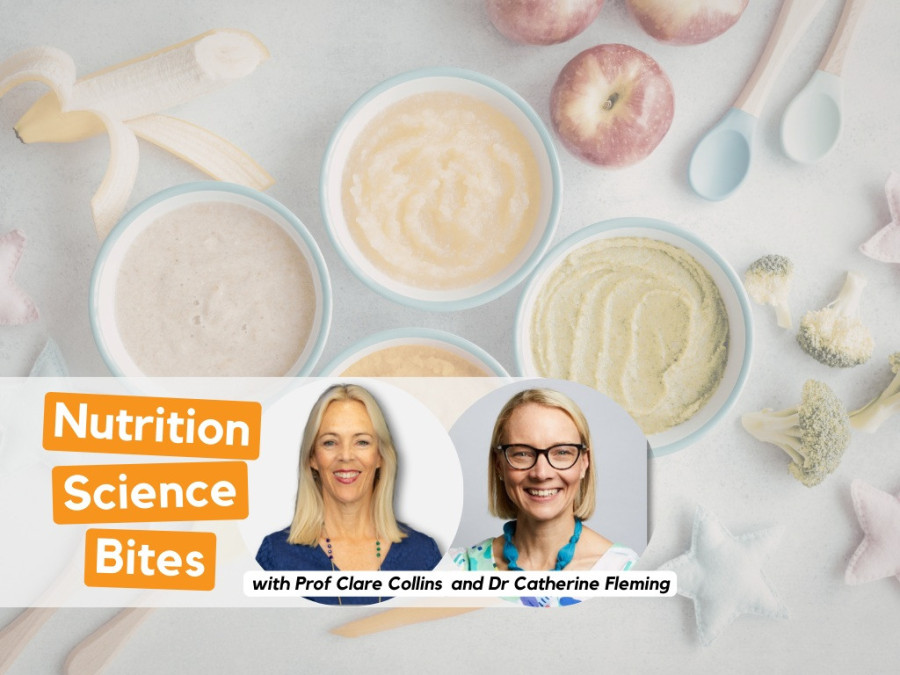
In this Nutrition Science Bites episode, Professor Clare Collins and Dr Catharine Fleming, from Western Sydney University, discuss the rise of squeeze pouches for infant feeding. They discuss nutritional value of products, safety features of the pouches, and the implications of using them for child development. The conversation addresses guilt parents may feel about using these products, the need for better regulation around infant food products, and practical tips to help parents and carers help children learn to like eating healthy food. The discussion also touches on cost-benefit-time trade off for homemade alternatives and the importance of exposing children to a variety of food textures and flavours.
Key Takeaways
- No parent should be made to feel guilty about feeding choices.
- Squeeze pouches are convenient but can be high levels in added sugars and low in essential nutrients.
- Check the ingredient list and nutrition information panel on the product label.
- Texture and flavor variety are crucial for child development.
- Homemade alternatives can be more cost-effective than pouches.
Interested in whether yogurt pouches are a good choice? Check our No Money No Time article
To check your plant variety at No Money No Time using our Healthy Eating Quiz: Click on the top right hand 'green button' called 'How healthy is my diet'
Want a more Personalised Food, Nutrient Assessment Report? Use our Australian Eating Survey - For a 50% discount enter the 'DietCheck' code at the checkout! Purchase here
Here's the link to the No Money No Time closed Facebook group (be sure to take the Healthy Eating Quiz first)
Our No Money No Time email: nmnt@newcastle.edu.au and our Nutrition Science Bites email: nutritionsciencebites@newcastle.edu.au
Are you in a position to make donation to support our No Money No Time website? Donate here
Keywords: squeeze pouches, toddler nutrition, baby food, convenience, parenting tips, nutritional value, food regulation, infant feeding, dietary guidelines, healthy eating