
Healthy, Easy Recipes

 Back to Recipes

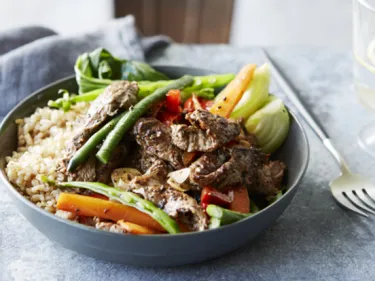
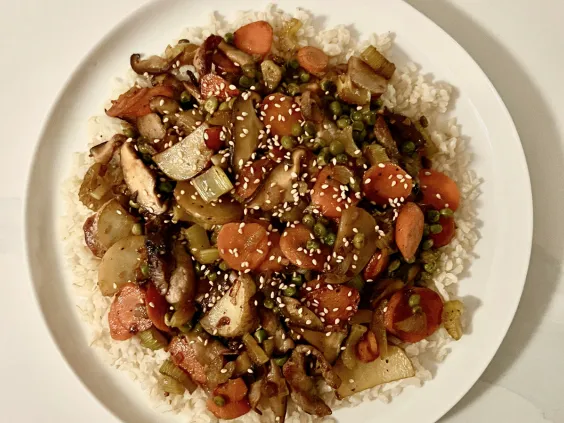
NiMe-Style Pork Stir Fry

Inspired by the principles of the NiMe™ (Non-industrialized Microbiome Restore) Diet, this colourful stir-fry is packed with a variety of plant foods and minimally processed ingredients that help nourish the beneficial bacteria living in your gut.

20 mins
10 ingredients
$4.4 / person
Favourite Add to favourites Remove from favourites
NiMe-Style Pork Stir Fry

Ingredients

Serves = 2

1 tablespoon sesame oil

200g pork fillet, cut into thin strips

½ brown onion, sliced

2 carrots, sliced

2 celery stalks, sliced

¾ cup mushrooms, sliced

¾ cup frozen peas

2 teaspoons minced garlic

1 tablespoon light soy sauce

1 ½ cups brown rice, cooked
It’s this easy

  • Heat sesame oil in a large frying pan or wok over medium heat.
  • Add the pork and stir-fry for 4-5 minutes, or until browned and cooked through. Transfer to a plate and set aside.
  • To the same pan, add the onion, carrot and celery. Stir-fry for 5-6 minutes until softened slightly. Add a splash of water if the pan is dry.
  • Stir in the garlic and cook for 30 seconds until fragrant.
  • Add the mushrooms and peas and cook for 3-4 minutes until softened.
  • Return the pork to the pan. Add the soy sauce and stir well to combine.
  • Serve over cooked brown rice

Tweaks

  • Save time by using a bag of frozen stir-fry vegetables
  • Swap pork for chicken, lean beef strips or firm tofu
  • Add a sprinkle of sesame seeds before serving

Notes

Serves = 2

Nutrition information (per serve),

  • Energy (2060kJ)
  • Protein (31g)
  • Total Fat (12g)
  • Saturated Fat (2g)
  • Carbohydrate (58g), (Starch (44.6g), Sugars (13.8g), Added sugars (0.1g), Free Sugars (0.1g))
  • Dietary Fibre (11.6g)
  • Sodium (540mg)
  • Potassium (1280mg)
  • Calcium (91mg)
  • Iron (3.4mg)


Author/s: Anissa M. Armet, PhD, Registered Dietitian and Jens Walter, Dr. rer. Nat

The NiMe diet

Allergies

Contains: Sesame, Soy.
Your Personal Healthy Eating Quiz

What you eat or don’t eat affects how you look, feel and perform. Take our short quiz to find out what foods you could introduce to help you be your best.

Read More Show Less

What is healthy eating?

Eating healthy is making sure you enjoy a wide variety of foods from each of the five major food groups daily, in the amounts recommended. The five major food groups as recommended by the Australian Guide to Healthy Eating are:

  1. vegetables and legumes/bean
  2. fruit
  3. lean meats and poultry, fish, eggs, tofu, nuts and seeds, legumes/beans
  4. grain (cereal) foods, mostly wholegrain and/or high cereal fibre varieties
  5. milk, yoghurt, cheese and/or alternatives, mostly reduced fat.

Foods are grouped together because they provide similar amounts of key nutrients and eating a variety of foods from the list above helps to promote good health and reduce the risk of disease.

How do I improve my diet?

If you want to improve your diet you have come to the right place. By completing the Healthy Eating Quiz you’ll receive instant personalised feedback and a report on your diet quality to highlight any areas where you can improve your overall eating habits. Your score is based on the frequency and variety of the foods consumed from the five major food groups mentioned above. No Money No Time can help you improve your score by providing tips, goals and suggestions. On top of this we will provide quick, cheap and healthy recipes as well as credible answers to diet hacks, myths and FAQ’s.

Is my diet healthy?

Dietary habits are different between people. Some people choose to follow a particular diet (i.e., Keto diet or vegan diet) while some have to make changes due to certain food restrictions or health conditions. If you want to know if what you usually eat is healthy, then do the Healthy Eating Quiz today to give you the answers in less than 10 minutes.

Why is healthy eating important?

Your HEQ score and personalised feedback report is based on the frequency and variety of healthy core foods you usually eat. This is important because no single food contains all the nutrients we need to stay healthy. Some foods are higher in nutrients than others and people who have a lot of variety in the foods they eat are more likely to be healthy and to stay healthy. In other words, if you can eat a large variety of vegetables as opposed to only 2-3 types of vegetables, the benefits are much greater. This type of diet also helps you to feel better, think better and perform better during your usual daily activities.

Take the Healthy Eating Quiz