
In partnership with Nuts for Life
Cardiovascular disease, which includes heart disease and stroke, is one of the most common health conditions in Australia. While it has many contributing factors, what we eat plays a key role in lowering our risk. Rather than focusing on single foods, research shows that your overall eating pattern is what matters most. Heart-healthy eating patterns, such as those recommended by the Heart Foundation and the Mediterranean diet, consistently include nuts as one of the core food groups.
Cardioprotective effects of nuts
Regular nut consumption is linked to better heart health outcomes. Research shows that people who eat nuts regularly have about a 20% lower risk of cardiovascular disease related deaths. There is also evidence that the more often nuts are eaten, at the recommended serve of a handful per day, the greater the benefit.
Nuts have also been shown to improve important markers of heart health. These include lowering blood cholesterol levels and ensuring blood vessels stay relaxed, allowing blood to flow more easily.
Why nuts are so beneficial?
Nuts are nutrient-dense and contain a combination of healthy fats, fibre, and phytonutrients that work together to support heart health.
Nuts are packed with bioactive compounds that support your body in different ways:
Vitamin E | Acts as an antioxidant to protect cell membranes from oxidative damage |
Phytosterols | Helps block cholesterol absorption in the gut |
Soluble Fibre | Binds cholesterol and bile salt, and helps remove them from the body |
Polyphenols | Act as an antioxidant, helping protect blood vessels and support healthy blood flow |
L-arginine | Aids nitric oxide production, supporting blood vessels to stay relaxed, and supporting adequate blood flow |
Selenium | Helps to protect cells from oxidative stress |
Magnesium | Helps regulate blood pressure and supports normal muscle and nerve function |
Nuts and body weight
A common concern is that nuts may lead to weight gain due to their energy content. However, research does not support this – and in fact, a daily handful of nuts can help (not hinder) weight management.
Current intake in Australia
Despite the benefits, most Australians are not eating enough nuts. Only around 2% of people meet the daily target intake of 30 grams per day, while approximately 60% do not eat nuts at all.
Meeting the recommended 30g of nuts per day is a simple opportunity to improve diet quality and support long-term health.
How to include more nuts
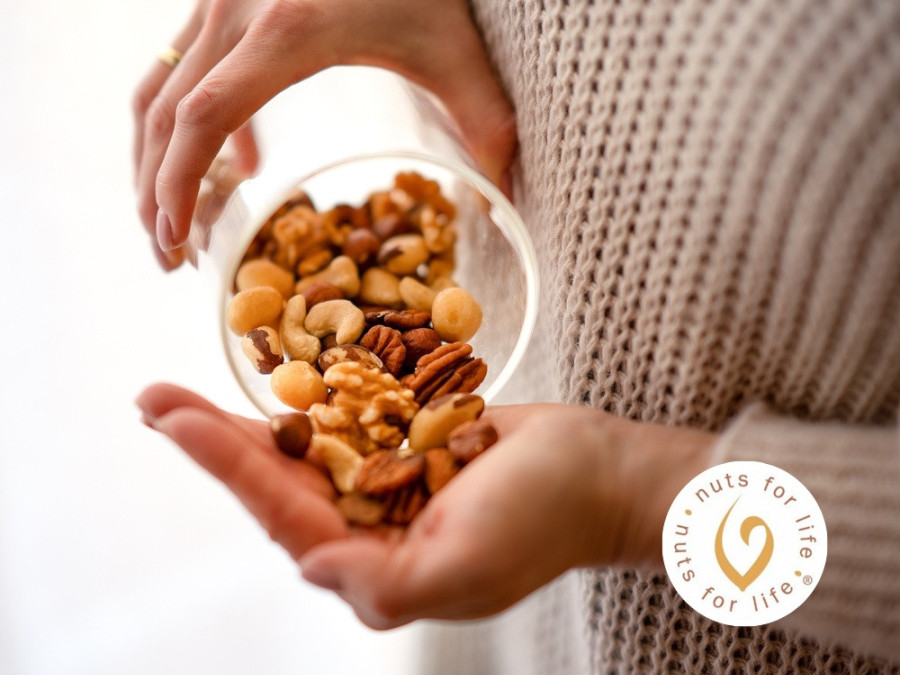
Adding nuts into your routine can be simple and practical. A good starting point is aiming for one 30-gram handful each day.
Nuts can be eaten as a snack, added to breakfast options like oats or yoghurt, or included in meals for extra texture and flavour. They work well in salads, vegetable dishes, and grain-based meals.
Including a variety of nuts is beneficial, as different types provide slightly different nutrients. One simple strategy is to create a “diversity jar” with a mix of nuts and seeds to sprinkle over meals throughout the day.
Looking for some recipe inspo to go nuts for heart health this Heart Week (May 4-10th, 2026)? Try some of our most popular recipes that include nuts!