Serves = 12
3 soft or mushy bananas
3 eggs
⅓ cup extra virgin olive oil
¼ cup maple syrup
1 ½ cups self-raising flour (you can use wholemeal)
1 teaspoon bicarb soda
1 teaspoon cinnamon
Sprinkle of desiccated coconut for on top (optional)
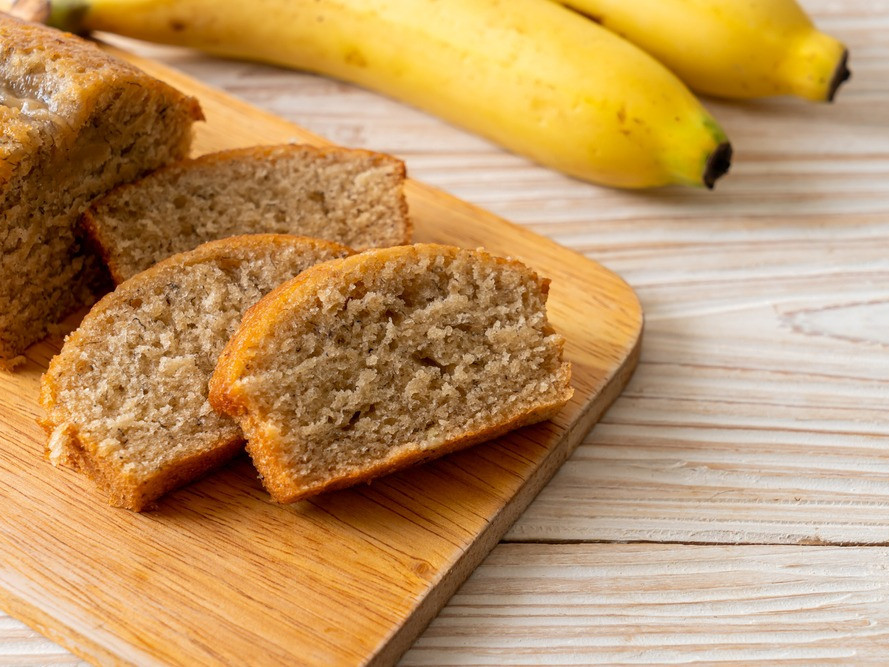
A never‑fail banana bread designed to nourish hungry little tummies on a budget.
1. Preheat the oven to 140°C (fan‑forced) and line a loaf tin with baking paper.
2. In a medium bowl, mash the bananas, then whisk in the eggs, olive oil, and maple syrup.
3. In a large bowl, combine the self‑raising flour, bicarb soda, and cinnamon.
4. Pour the wet mixture into the dry ingredients and stir gently until just combined - avoid overmixing.
5. Transfer the mixture to the prepared loaf tin and smooth the top.
6. Sprinkle desiccated coconut over the top (optional).
7. Bake for 1 hour, or until the loaf is golden and a skewer inserted into the centre comes out clean.
8. Cool in the tin for 10 minutes before transferring to a wire rack.
Nutrition Information (per serve)
Listen to the Nutrition Science Bites podcast episode with Dr Catherine Fleming and Prof Clare Collins: Should parents feel guilty about using baby food squeeze pouches? with Dr Catharine Fleming where they discuss the rise of squeeze pouches for infant feeding.
What you eat or don’t eat affects how you look, feel and perform. Take our short quiz to find out what foods you could introduce to help you be your best.
What is healthy eating?
Eating healthy is making sure you enjoy a wide variety of foods from each of the five major food groups daily, in the amounts recommended. The five major food groups as recommended by the Australian Guide to Healthy Eating are:
Foods are grouped together because they provide similar amounts of key nutrients and eating a variety of foods from the list above helps to promote good health and reduce the risk of disease.
How do I improve my diet?
If you want to improve your diet you have come to the right place. By completing the Healthy Eating Quiz you’ll receive instant personalised feedback and a report on your diet quality to highlight any areas where you can improve your overall eating habits. Your score is based on the frequency and variety of the foods consumed from the five major food groups mentioned above. No Money No Time can help you improve your score by providing tips, goals and suggestions. On top of this we will provide quick, cheap and healthy recipes as well as credible answers to diet hacks, myths and FAQ’s.
Is my diet healthy?
Dietary habits are different between people. Some people choose to follow a particular diet (i.e., Keto diet or vegan diet) while some have to make changes due to certain food restrictions or health conditions. If you want to know if what you usually eat is healthy, then do the Healthy Eating Quiz today to give you the answers in less than 10 minutes.
Why is healthy eating important?
Your HEQ score and personalised feedback report is based on the frequency and variety of healthy core foods you usually eat. This is important because no single food contains all the nutrients we need to stay healthy. Some foods are higher in nutrients than others and people who have a lot of variety in the foods they eat are more likely to be healthy and to stay healthy. In other words, if you can eat a large variety of vegetables as opposed to only 2-3 types of vegetables, the benefits are much greater. This type of diet also helps you to feel better, think better and perform better during your usual daily activities.