

GLP-1 Receptor Agonist (GLP-1 RA) medications prescribed for type 2 diabetes or weight management can help people improve weight-related health. Common names include semaglutide with the common drug names Ozempic and Wegovy, dulaglutide (Trulicity) with liraglutide (Saxenda) being phased out. Another drug tirzepatide (Mounjaro), contain both a GLP-1 RA and another medication called (glucose-dependent Insulinotropic Polypeptide. (GIP).
GLP-1 and GIP medications act on insulin secretion and appetite hormones, slow down stomach emptying which means people have better blood sugar control and do not feel as hungry, leading to eat less but feeling more satisfied, called ‘early satiety’. People taking these medications also report common nutrition-related side effects such as nausea, reflux, diarrhoea and constipation. The outcome is that people eat less, especially once the higher doses are given, leading to a reduction in body weight. Eating less increases the chance that you don’t get enough of the essential nutrients needed to promote health and well-being, including protein, vitamins (vitamins B1, B2, B3, C and D), minerals (like calcium and iron and zinc) and dietary fibre.
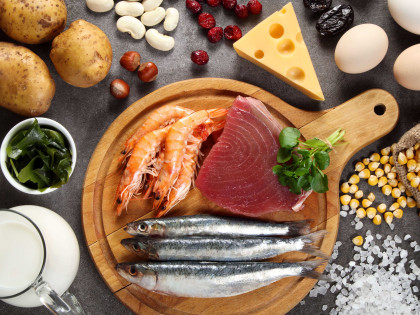
The good news is that you can continue to nourish your body by choosing a wide variety of nutrient dense foods, that are rich in nutrients but also lower in kilojoules. This can help you stay well-nourished and feeling well!
We have created a list of nutrient deficiencies that people taking GLP-1s are at greater risk of, the foods you can find them in, and some No Money No Time recipe inspo to help boost nutrient intakes.
Essential nutrient |
Signs & symptoms of deficiency |
Food sources |
NMNT recipe inspo |
Vitamin B1 Thiamine |
Fatigue, “brain fog”, early satiety, burning/tingling/numbness in feet or hands, brain changes |
Whole grain breads and cereals, legumes, nuts and seeds, salt-reduced vegemite |
|
Vitamin B2 Riboflavin |
Cracks at mouth corners (Joker mouth), red/ swollen or cracked lips, itchy or scaly dermatitis |
milk, yoghurt, cheese, wholegrain breads and cereals, egg white, leafy green vegetables, meat |
|
Vitamin B3 Niacin |
Dermatitis with dark, scaly rash, diarrhoea, confusion, memory loss, pellagra |
lean meats, milk, eggs, wholegrain breads and cereals, nuts, leafy green vegetables |
|
Vitamin B6 Pyridoxine |
Dermatitis with scaly skin, cracked lips, red/swollen tongue, anaemia, confusion, depression Note: excessive intake can lead to toxic levels that can cause permanent nerve damage |
cereal grains and legumes, green and leafy vegetables, fish and shellfish, meat and poultry, nuts, liver and fruit. |
|
Vitamin B12 Cobalamin |
Burning/tingling/numbness in feet or hands, reduced appetite, mouth ulcers |
Red meat, fish, eggs, dairy, fortified (plant) milk* |
|
Vitamin C |
Fatigue, bleeding or swollen gums, poor wound healing, joint pain, and bruising, scurvy |
fruit (oranges, mandarins, lemons, limes, grapefruit, mango, strawberries, kiwifruits, tomato); vegetables (capsicum, spinach, broccoli, cabbage and green vegetables) |
|
Vitamin D |
Fatigue, muscle weakness, bone pain without clear cause, falls or fractures |
Fatty fish, eggs, butter, fortified (plant) milk* |
|
Calcium |
Fatigue, general weakness, muscle cramps or spasms, osteoporosis |
Dairy, calcium-fortified plant milk*, tofu, almonds, dark green vegetables |
|
Iron |
Persistent fatigue, restless legs, hair thinning or loss, reduced appetite, mouth ulcers, headache, general weakness, “brain fog” |
Red meat, legumes, tofu, seeds, dark green leafy vegetables |
|
Magnesium |
Fatigue, muscle cramps, tingling, heart palpitations, irritability, poor sleep |
Nuts and seeds, whole grains, dark chocolate, legumes |
|
Potassium |
Fatigue, heart palpitations, weakness |
Fruit, vegetables, legumes, dairy |
|
Protein |
Muscle loss, weakness, reduced physical strength and performance, sarcopenia (age related muscle loss) |
Meat, fish, poultry, diary, legumes, nuts |
|
Fibre |
Constipation, hungry shortly after eating, bloating, unstable blood glucose levels |
Whole grains, legumes, fruit, vegetables |
*Check the label, if the plant-based milk has been fortified, the vitamin or mineral added will be named in the ingredient list
While food is the best way to get essential nutrients, if you’re unable to eat enough to get all the essential nutrients you need, or if signs of deficiency are present, specific supplements may be needed. These are best taken in consultation with your GP and Accredited Practising Dietitian.
To find out more about micronutrients in supplements and foods, this article about nutrients from fruit and vegetables versus multivitamins will be helpful.
If you are experiencing a lot of symptoms from GLP1-RA medications, you are advised to discuss this with your GP and consult an Accredited Practising Dietitian to help optimise your nutrient intake from foods.