

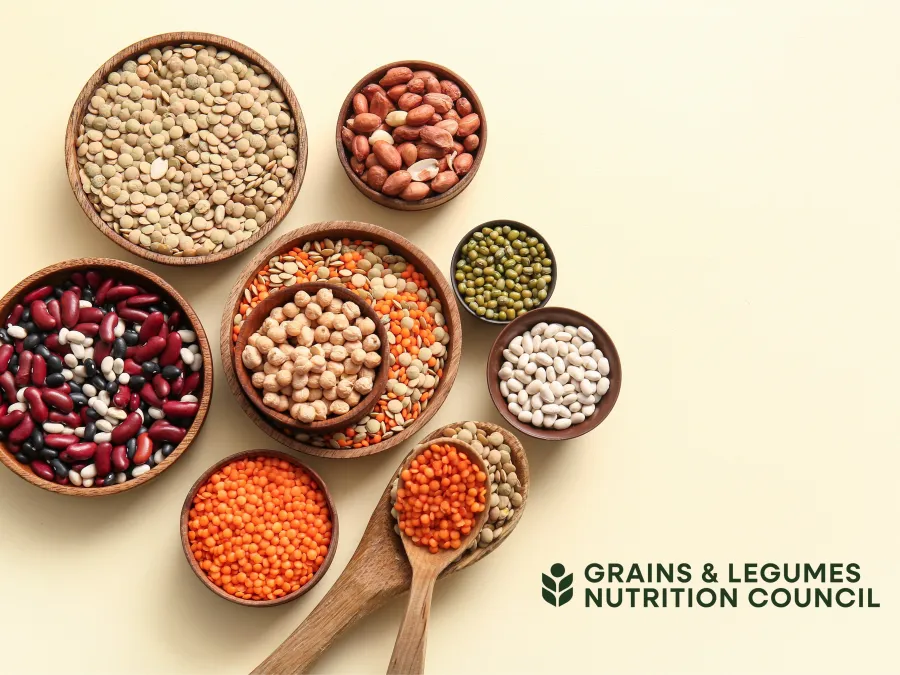
Legumes are an umbrella term for the entire plant – including the leaves, stem, and pods. We can further break down categories of legumes into
- Pulses: The edible seed of a legume that has been dried, e.g., chickpeas, lentils, split peas, beans (e.g., black, kidney, soybeans, cannellini, butter beans).
- Oilseed legumes: legumes high in oil content, often processed to use their oil in cooking and processing, e.g., peanuts, soybeans
- Fresh Legumes: e.g., peas, snow peas, sugar snap peas, green beans.
You can buy them in many different forms, including:
- Dried legumes: Often cheaper and great for batch cooking, though they take a little longer to prepare.
- Canned legumes: Super convenient - just drain, rinse and they’re ready to use.
- Legume-based products: Pulse pastas, chickpea pasta, chickpea flour.
- Snacks and dips: Widely available in supermarkets, e.g. hummus, bean dips, baked beans, flavoured snack cans of chickpeas, roasted chickpeas, lentil chips. Or make your own!
Why legumes?
- Legumes are high in fibre which keeps you feeling fuller for longer and helps your bowels work well.
- They are rich in iron and folate, which help your body make haemoglobin in your blood.
- They are a great source of plant protein – pair with wholegrains, nuts or seeds throughout the day to create a complete protein. Soy products like soybeans, tofu, tempeh, and soy milk are some of the few plant-based foods that have all 9 essential amino acids, making them a complete protein.
- Dried and canned legumes cost much less than meat – and can be used to bulk meat dishes, or stand alone!
- They help improve soil health, reducing the need for synthetic fertilisers.
- Growing legumes requires less water and creates fewer greenhouse gases than raising animals for meat.
Eating them regularly can help keep blood sugar levels in the healthy range, lower cholesterol, and support gut health and a healthy microbiome. Plus, research shows that including just 150g of legumes each day can reduce your risk of developing diabetes, heart disease, and some cancers.
But – less than 30% of Australian's consume legumes on a regular basis. Previous GLNC research
indicates that if Australian adults were to incorporate just 50g of legumes (about 1/4 to 1/3 cup) into their daily eating pattern, it could potentially lead to annual savings of up to AUD $85.5 million in direct healthcare costs related to coronary heart disease alone. Small change, big impact!
Here are some easy swaps and smart shopping tips to help you boost your legume intake.
Legumes complement many different flavours and can be incorporated into lots of different meals!
1. Mix legumes into your regular dishes: Boost your soups and stews and power up your salads by adding different varieties of legumes.
- Curries: Add a can of chickpeas or lentils.
- Soups: Soups are made for legumes! Simply stir through cooked/canned beans or lentils, or blend through with other ingredients until smooth.
- Salads: Add your favourite canned legumes to any salad to turn a simple salad into a filling meal or side dish.
- Pasta dishes: Add chickpeas, cannellini beans, butter beans, or a 4-bean mix.
- Mashed potato: Add a can of drained white beans in the last 2 minutes of cooking. Mash as usual.
2. Take your meat further: Add a can of drained legumes to meat dishes or try swapping out 125g of meat for 1 can of legumes. Adjust the ratio to suit your taste. You can freeze any leftover meat or double the recipe and freeze portions for later.
- Mince dishes like Spaghetti Bolognaise or San Choy Bow: Swap some of the mince for brown lentils.
- Tacos or nachos: Swap some of the mince or meat for kidney beans or black beans.
- Burger patties or rissoles: Swap the meat (or a portion of the meat) for mashed kidney beans, black beans, or lentils to make a vego-friendly burger patty.
3. Snack smart: Legumes make great snacks!
- Enjoy hummus or a bean dip with crackers and veggie sticks
- Roast or air-fry some chickpeas for a spiced crispy snack!
- Swap butter for a spread of hummus on your toast or sandwiches
- Make some chickpea chocolate chip cookies
4. Try new recipes: Experiment with new recipes! Get inspired by Mexican, Mediterranean and Indian meals, which often feature legumes as the star of the show. Need some legume-filled recipes? Check out www.glnc.org.au for inspiration and download their FREE! Level Up with Legumes eBook for lots of legume loving recipes.
Use the table below to explore some of our No Money No Time recipes inspired by different cuisines.
|
Cuisine |
NMNT Recipes |
|
Mediterranean |
|
|
Mexican |
|
|
Indian |
|
|
Asian, Chinese & Japanese |
|
|
Italian & pastas |
|
|
Indonesian |
Kindly supported by the Grains and Legumes Nutrition Council (GLNC)